

Improving Dryer Efficiency in Ethanol Facilities
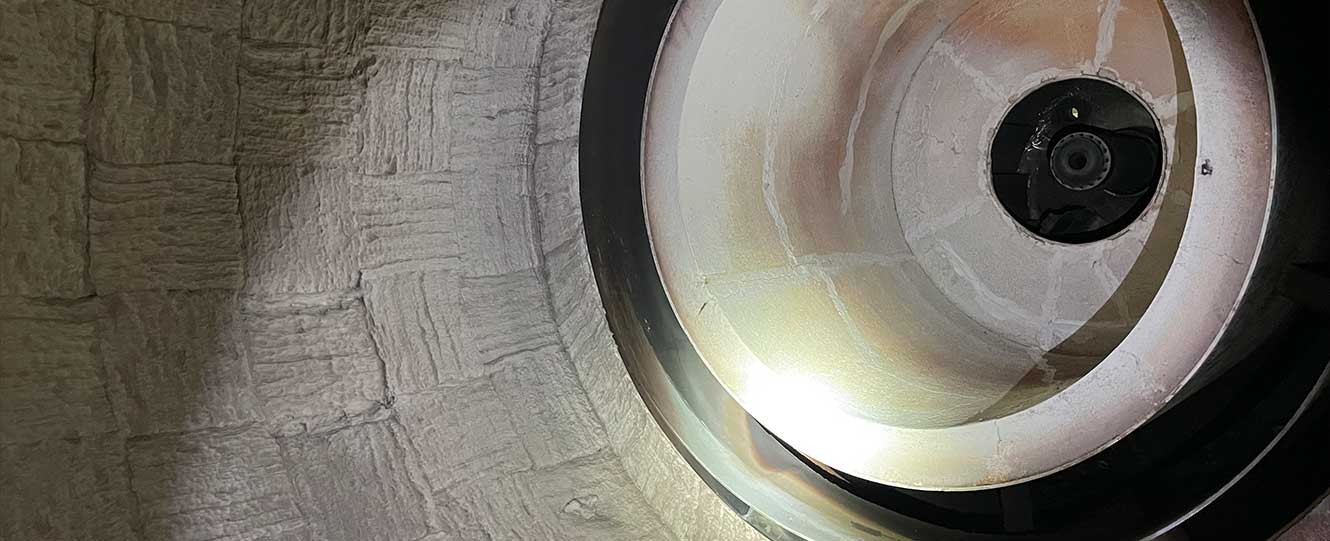
At ethanol plants, maintaining consistent thermal conditions is an important role in daily operations. Teams often point out how even small shifts in dryer performance can affect fuel usage, product consistency, and reducing maintenance and downtime during outages.
One way plants address this issue is by applying high-emissivity coatings to their linings facing extreme heat, allowing existing equipment to distribute that heat more evenly and effectively.
Let’s look at how that plays out.
A More Stable Thermal Environment Supports Reliability
For most plants, the path to higher dryer reliability begins with better heat distribution. In practice, that means ensuring the ceramic fiber, combustion chamber surfaces, and burner tile inside the dryer absorb and re-radiate heat evenly.
Emisshield® High-Emissivity Coating Technology is designed for exactly that. When applied to the hot face of dryer linings, the coating raises surface emissivity into the 0.85–0.95 range, allowing the unit to absorb and re-radiate more energy uniformly. This creates steadier operating conditions and helps the unit reach temperature with less cycling stress.
Maintenance teams often mention that dryer temperature swings tend to show up first as uneven drying or higher gas usage. With a more even heat profile, those issues become less frequent.
How Reliability Improvements Show Up in Daily Operation
A couple of things stand out when Emisshield high-emissivity coatings are installed in dryers.
First, natural gas usage trends downward.
Multiple ethanol facilities have documented reductions in fuel consumption after coating their dryer ceramic fiber and burner tile. One Midwest plant reported approximately 4% fuel savings in two coated dryers, along with more uniform heat distribution and fewer hot spots.
Another plant saw a 7.36% reduction in energy use (MMBtu/hr) in the coated dryer, which allowed operators to run the system with less thermal input while holding production steady.
In biofuel applications more broadly, Emisshield has delivered natural gas reductions as well — including a documented energy efficiency improvement of 1,209 BTU per gallon in a thermal oxidizer system.
Second, production reliability improves.
Several case studies note increased or steadier coproduct yield following coating application. In one Midwest operation, dryers with Emisshield recorded a 3.8% increase in total dried coproduct production and a 3.3% increase per ton dried while maintaining consistent ethanol output.
Another dryer project documented a 617-gallon-per-day increase in ethanol production tied to improved moisture removal efficiency and better thermal balance across the unit.
Protecting Dryer Linings for Longer Service Life
Reducing maintenance and downtime is also about increasing the life of your refractory. Dryer linings take a significant amount of thermal cycling and abrasion each season. Over time, fiber shrinkage, dusting, or localized overheating can lead to unexpected maintenance costs.
High-emissivity coatings help extend refractory life by protecting ceramic fiber modules from excessive heat load and high-velocity gases. Testing shows coated ceramic fiber experiences less than 5mm shrinkage, compared to typical uncoated ranges of 35mm, while also withstanding higher continuous-duty temperatures by roughly 300°F.
For ethanol teams focused on outage planning, that stability matters. During annual inspections under Chase Nedrow’s Asset Protection Plan, coated fiber modules are often found in great condition with only little to no touch-ups required in high-flow zones.
Less premature wear means reducing costs — and fewer surprises during outage season.
Supporting Biofuel Technology and Operational Efficiency
The ethanol and biofuel sector continues to push for greater efficiency, lower carbon intensity, and more resilient operations. Dryer efficiency ties into all three.
By improving heat transfer and stabilizing combustion conditions, high-emissivity coatings help ethanol plants:
- Lower natural gas usage.
- Maintain steady coproduct quality.
- Reduce hot spots.
- Extend refractory service life.
- Support CI score improvements through more efficient thermal processing.
These coatings integrate cleanly into existing dryers and take advantage of the heat already inside the system — allowing plants to improve performance without equipment replacement or extended downtime.
And because Emisshield is a NASA-derived technology engineered to operate up to 3100°F, it aligns well with the long-term durability goals that many producers share.
A Practical Path to Reducing Dryer Maintenance
When you bring it all together, the path to better dryer reliability is straightforward: improve thermal consistency, lower the energy required to run the unit, and protect the refractory that holds the system together.
Emisshield High-emissivity coatings give ethanol producers a proven way to achieve those gains. Plants that have adopted the technology are seeing steadier performance, reduced fuel demand, and reducing maintenance and downtime during outages — all while supporting broader biofuel technology goals.
If your team is exploring ways to improve dryer reliability, Emisshield may be the place to start.
Reach out to our team to discuss your operational goals or explore our ethanol solutions page for more detail.